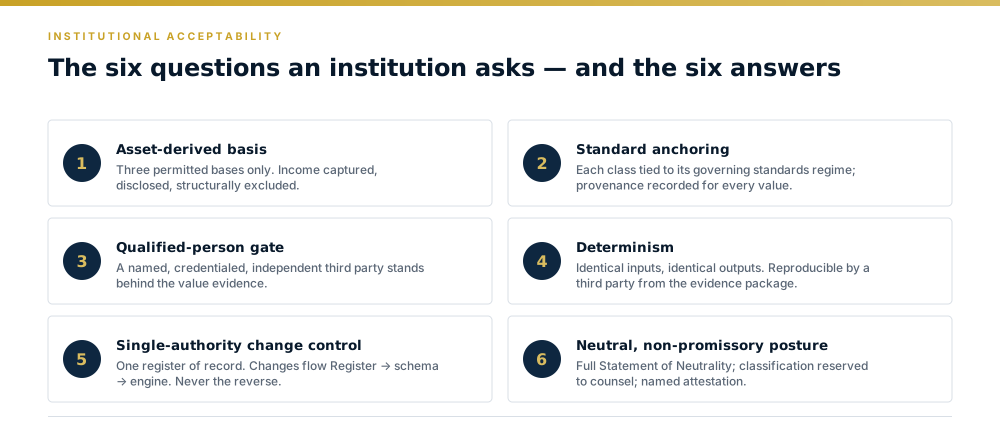
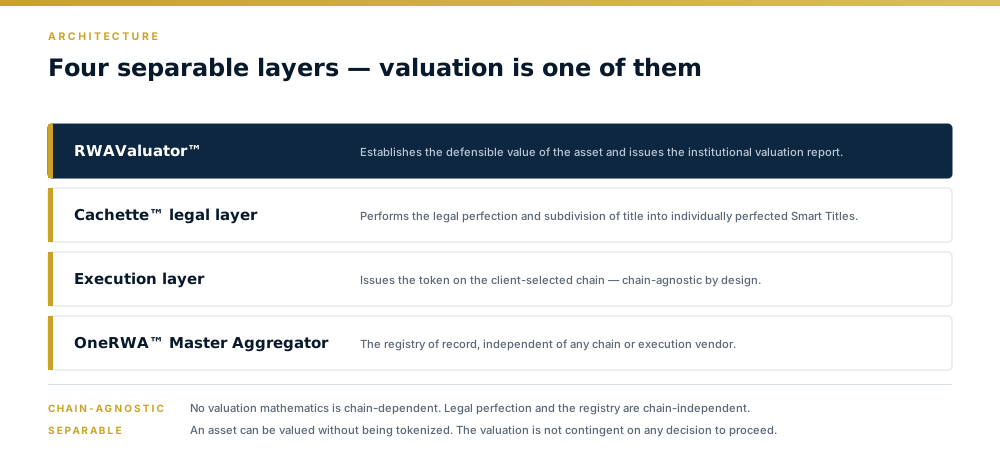
An institution asked to rely on a valuation asks a predictable series of questions. RWAValuator™ is engineered around six answers.
Parameter 1 — The valuation basis is asset-derived
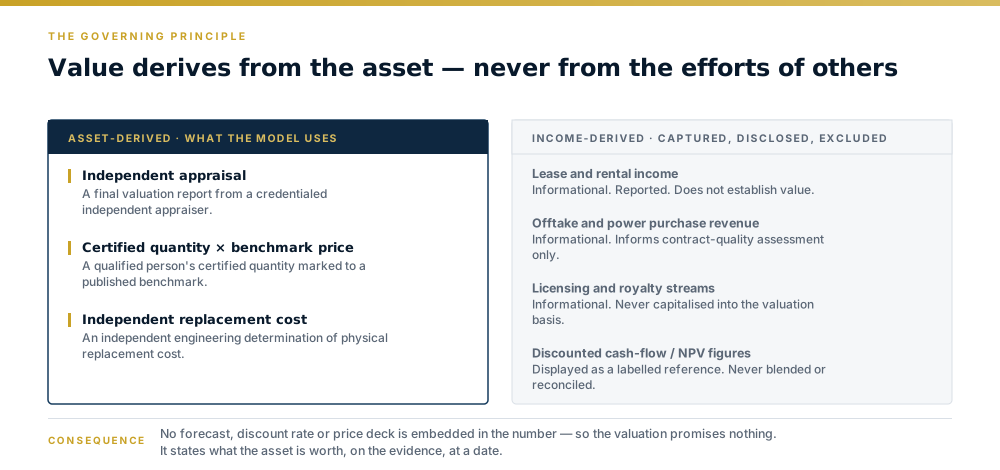
Requirement. The value must be attributable to the asset, not to an enterprise, a forecast, or a promoter.
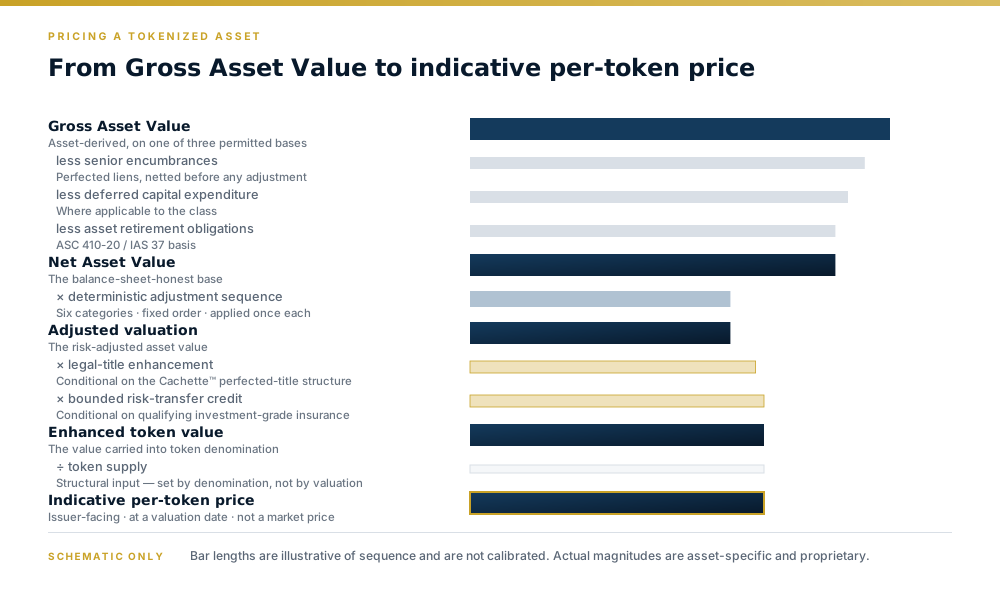
How the model satisfies it. Gross Asset Value admits three bases only — independent appraisal, certified quantity marked to a recognized benchmark, or independent replacement cost. Income-derived inputs are captured and disclosed but structurally excluded from the computation. Where an evidence package includes a discounted cash-flow figure, it is displayed as a labelled reference and is prohibited from entering, blending with, or adjusting the valuation.
Parameter 2 — Every input is anchored to a recognized standard
Requirement. Valuation inputs must rest on named, authoritative standards — not on internal convention.
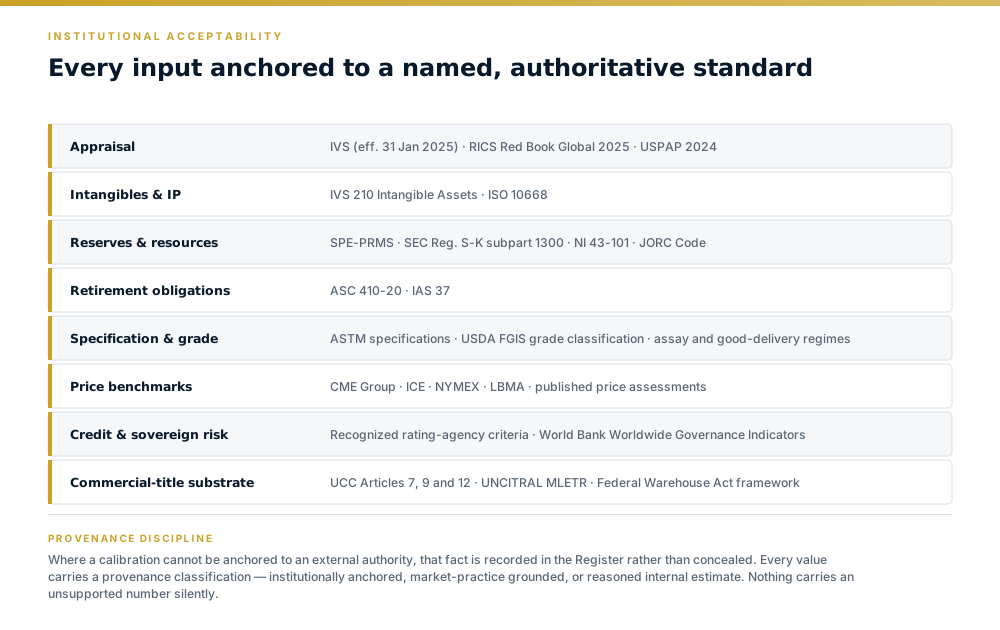
How the model satisfies it. Each asset class is tied to the standards regime that governs it:
| Domain | Anchoring standards |
|---|
| Appraisal | International Valuation Standards (published 31 January 2024, effective 31 January 2025); RICS Valuation — Global Standards (Red Book Global, 2025 edition, effective 31 January 2025); USPAP (2024 edition, current) |
| Intangibles & IP | IVS 210 Intangible Assets; ISO 10668 (brand valuation) |
| Reserves & resources | SPE-PRMS; SEC Regulation S-K subpart 1300 (17 CFR 229.1300–1302); NI 43-101; the JORC Code |
| Retirement obligations | ASC 410-20; IAS 37 |
| Commodity specification & grade | ASTM specifications; USDA FGIS grade classification; recognized assay and good-delivery regimes |
| Price benchmarks | Recognized exchange and assessment benchmarks — CME Group, ICE, NYMEX, LBMA, and published price assessments |
| Counterparty & sovereign credit | Recognized rating-agency criteria; World Bank Worldwide Governance Indicators |
| Commercial-title substrate | UCC Articles 7, 9, and 12; UNCITRAL MLETR; the Federal Warehouse Act framework |
Where a calibration cannot be anchored to an external authority, that fact is documented in the Register rather than concealed — an internal provenance classification records, for every value in the model, whether it is institutionally anchored, grounded in documented market practice, or a reasoned internal estimate. Nothing carries an unsupported number silently.
Parameter 3 — A qualified person stands behind the evidence
Requirement. Value evidence must come from an identified, credentialed, independent third party — not from the asset owner.
How the model satisfies it. A universal qualified-person evidence gate applies across every asset class: the valuation basis must be a final report from an independent qualified person or firm — a credentialed appraiser under USPAP, IVS, or RICS; a qualified person under S-K 1300, NI 43-101, JORC, or SPE-PRMS; or an independent engineering determination. Class-specific gates layer on top, requiring that the price basis match the certified grade, specification, processing state, custody status, or entitlement form actually evidenced. Where the evidence does not match the basis, the model fails closed rather than proceeding on an assumption.
Parameter 4 — The result is deterministic and reproducible
Requirement. A third party must be able to reproduce the number.
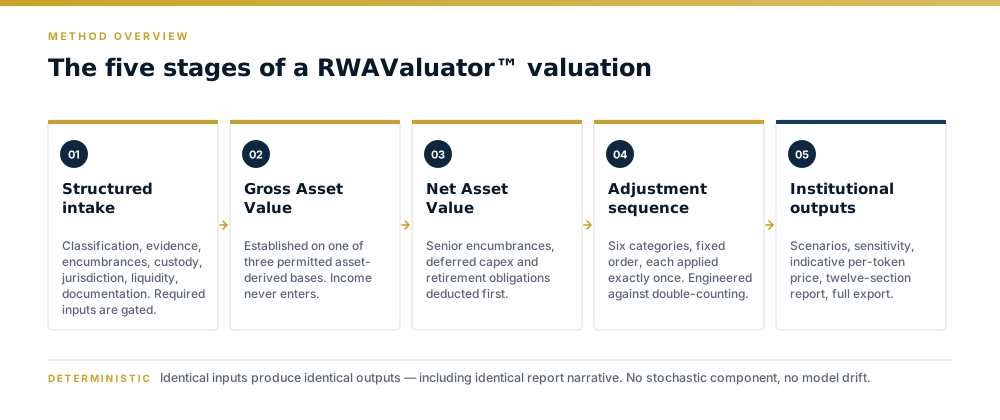
How the model satisfies it. The computation is a fixed chain with no stochastic element. Identical inputs yield identical outputs, including identical narrative text. The complete input record is exported with every valuation, and the report's terminal appendix reproduces every value as entered. Reproduction requires only the evidence package and the model version.
Parameter 5 — Change control is single-authority and auditable
Requirement. If the methodology can change silently, the valuation cannot be relied upon.
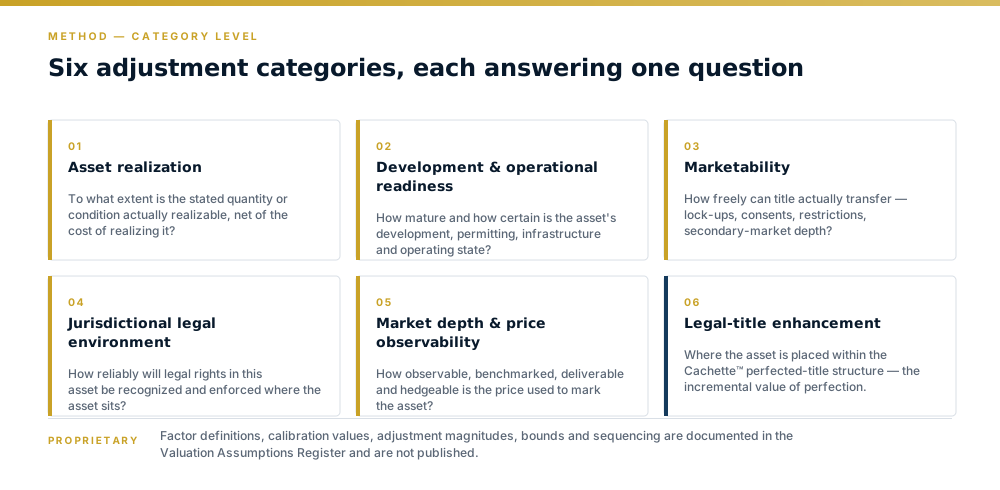
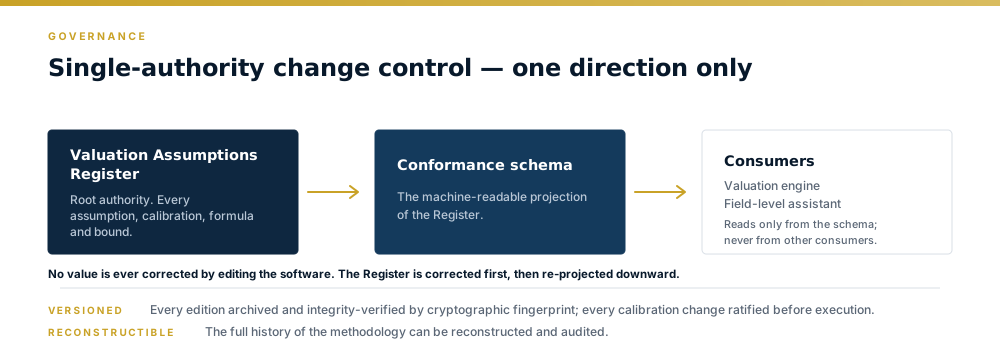
How the model satisfies it. A single document — the Valuation Assumptions Register — is the root authority for every assumption, calibration, formula, and bound in the model. A machine-readable conformance schema is its projection. The consumers of that schema, including the valuation engine itself, read only from it and never from each other. Changes flow in one direction only: Register first, then schema, then engine. No value is ever "fixed" by editing the software. Every edition is versioned, archived, and integrity-verified by cryptographic fingerprint, and every calibration change is ratified before it is executed. The methodology's history is therefore reconstructible in full.
Parameter 6 — The posture is neutral and non-promissory
Requirement. The valuation must not overstate what it is, and must not adjudicate what it cannot.
How the model satisfies it. Every output carries a full Statement of Neutrality and Limitations. The report states expressly that it is not legal, financial, tax, accounting, or investment advice; that it is not a securities offering document, private placement memorandum, or prospectus; and that it does not adjudicate the legal or regulatory classification of any asset or arrangement — which is reserved to Vanward Global's Chief Compliance & Legal Officer and to independent counsel at engagement level. The attestation block names the human beings accountable for the output.